Whitepaper

PR success is difficult to measure and even harder to compare, especially regarding long-term strategic goals. While other business departments have long been data-driven, PR often still operates on gut feeling and isolated wins.
We are shedding light on the industry with the largest PR survey in the German-speaking region. Over 220 companies have disclosed their PR strategies, budgets, and success metrics—a comprehensive treasure trove of data for anyone looking to take their communications to the next level.
What you can gain from this survey:
This survey provides no theoretical models, but rather tangible insights and concrete benchmarks you can use to optimize your PR strategy immediately.
Enjoy the read.
PR success is difficult to measure and even harder to compare, especially regarding long-term strategic goals. While other business departments have long been data-driven, PR often still operates on gut feeling and isolated wins.
We are shedding light on the industry with the largest PR survey in the German-speaking region. Over 220 companies have disclosed their PR strategies, budgets, and success metrics—a comprehensive treasure trove of data for anyone looking to take their communications to the next level.
This survey provides no theoretical models, but rather tangible insights and concrete benchmarks you can use to optimize your PR strategy immediately.
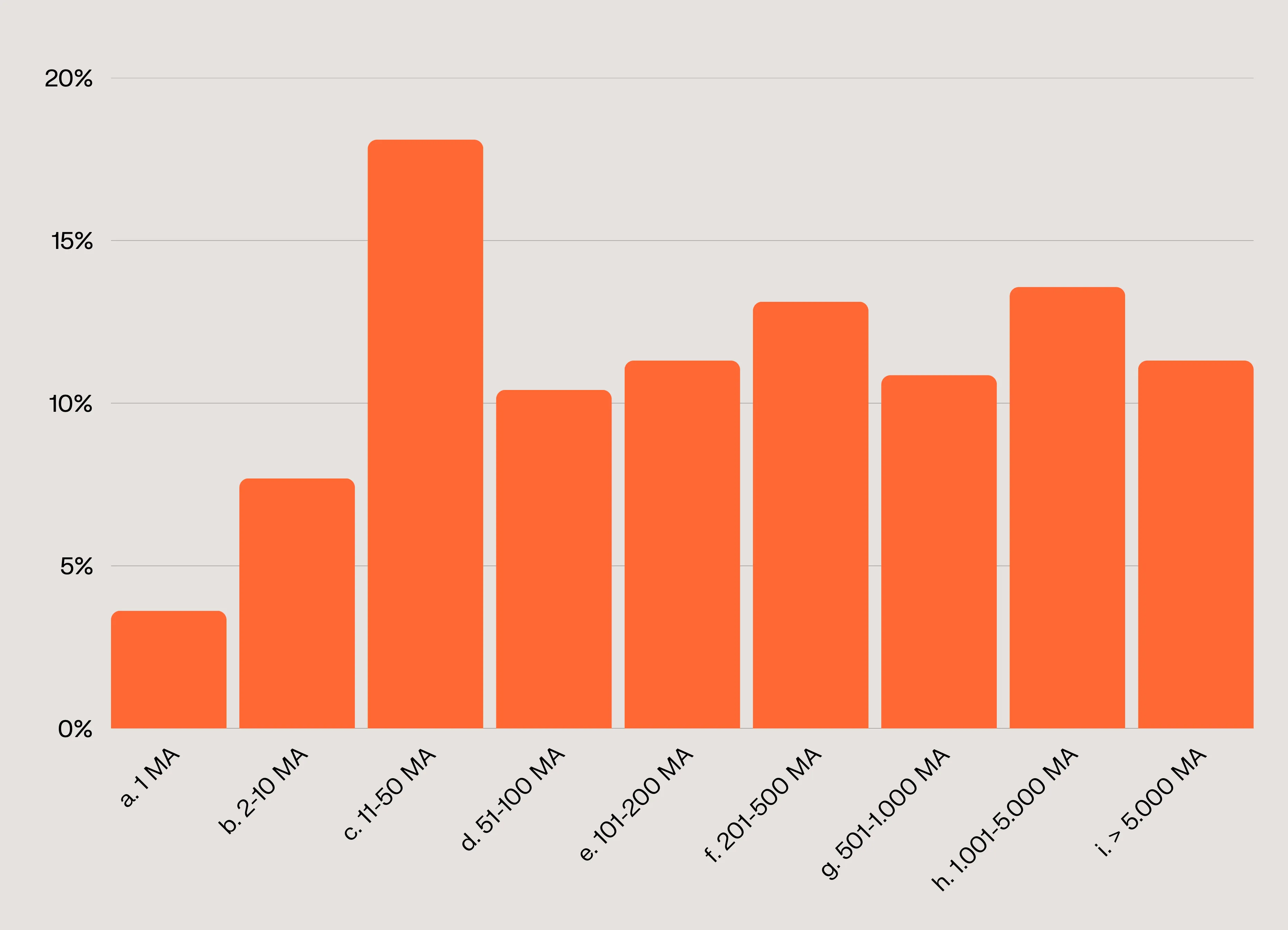
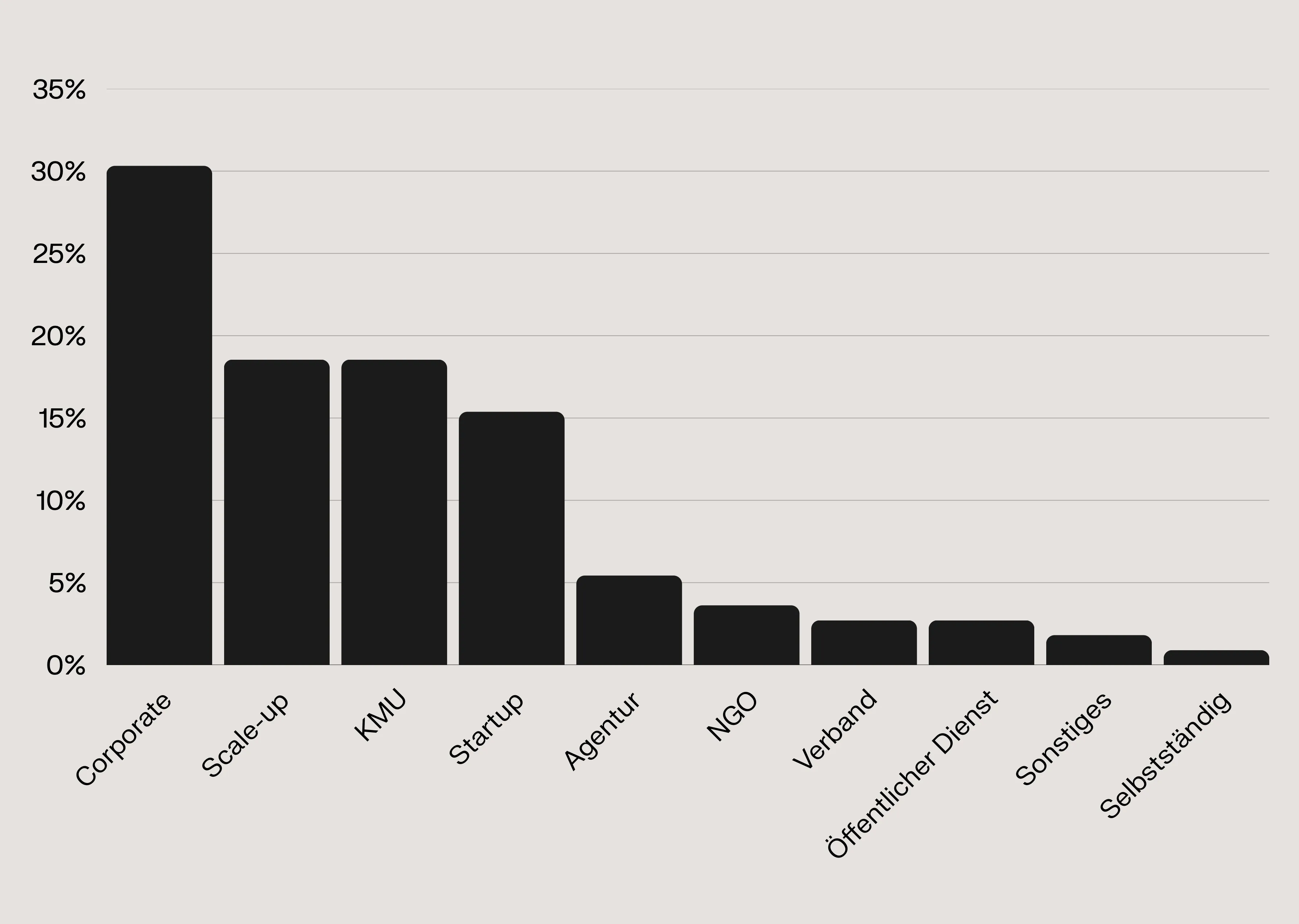
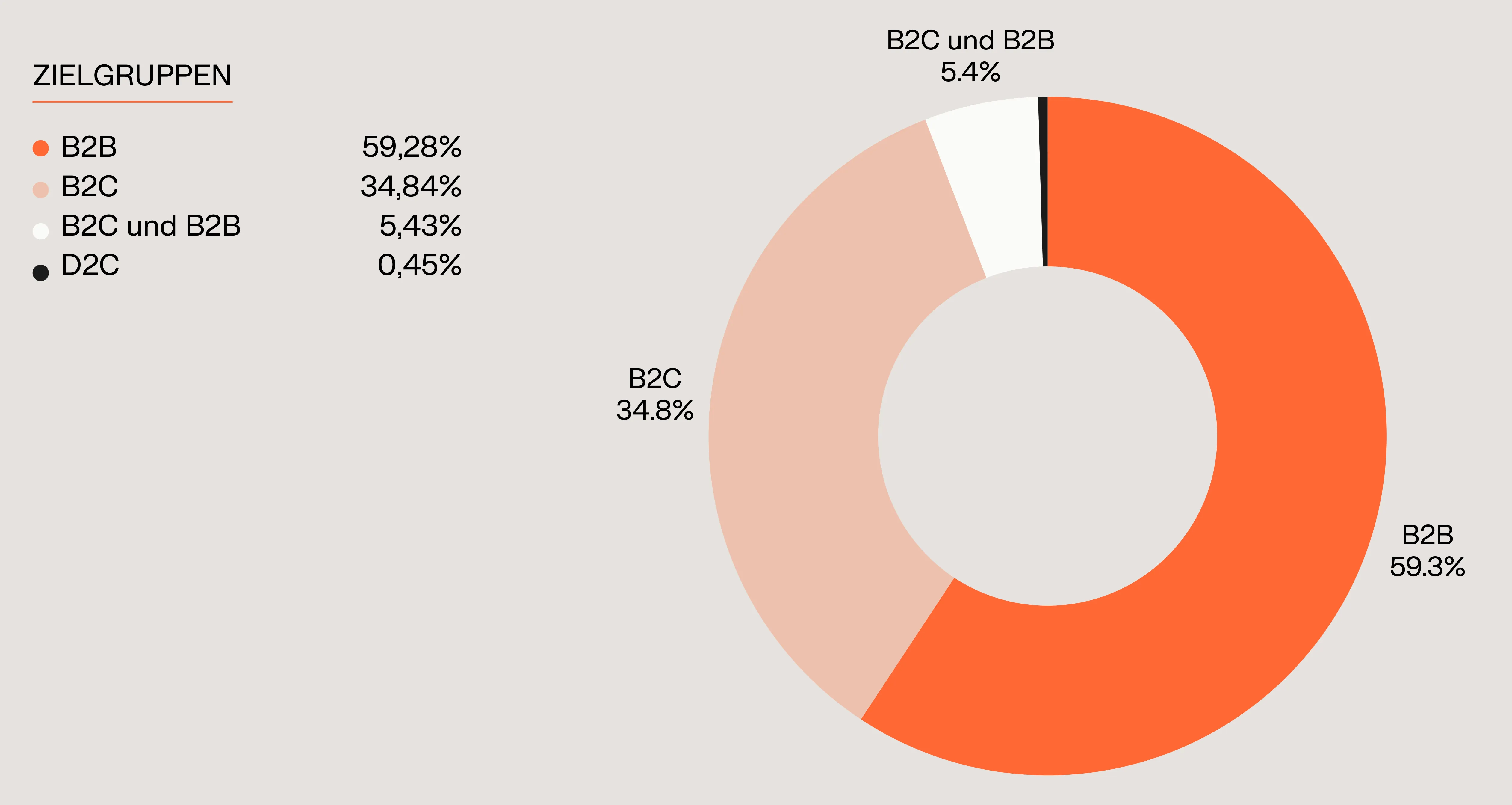
Between October 21, 2024, and February 12, 2025, we surveyed a total of 252 companies. After cleaning the data by removing 31 responses (companies that do not conduct PR in the DACH region or communications agencies), 221 data sets remained for analysis.
This broad range means: No matter where your company stands, you will find relevant insights for your situation in this survey.
Industries

Company sizes
Types
Target audiences
01.
The results show that communication priorities shift as company size increases. The larger the company (from about 100 employees), the greater the focus on employer branding and crisis communication.
Meanwhile, this focus never exceeds 44% for any other company size. SMEs, in particular, are leaving a lot of potential untapped here, at just 24%.
"SMEs make up 99% of businesses in Germany – and they are the most affected by challenges like the skilled labor shortage and digitalization. The problem: For 'hidden champions,' visibility is no longer an option, it's a must. Otherwise, hidden champions quickly become ex-champions."
By comparison, corporates place the least focus on brand awareness (only 64%) and concentrate more on reputation management (53%) and crisis communication (30%).
A look at target groups shows that B2C companies place more value on reputation improvement (50% vs. 32% in B2B), while B2B companies focus more heavily on lead generation (44% vs. 25% in B2C).
In addition, B2C companies are more likely to want to reach new target groups (35% vs. 17% in B2B) and rely more on crisis communication (28% vs. 11% in B2B).
We asked participants about their biggest current communication challenge:
17% are struggling with a lack of resources – whether budgetary or personnel-related. "More output despite few resources" (SME, B2B, Finance)
13% have trouble becoming visible to their (new) target audience. "Reaching new target groups and the corresponding media" (Scale-up, B2C, E-Commerce)
11% are dissatisfied with their positioning or PR strategy. "Clear positioning and starting marketing/PR far too late" (Scale-up, B2B, SaaS)
10% lack the right media contacts. "Getting to the right contacts in the media (...)" (Corporate, B2C, Travel)
The connection between resources and output is obvious, but: Chapter 3 makes it clear that there are certainly companies with few resources that are still very satisfied with their media presence.
The fact is: Almost one in five companies complains about having too few resources for their PR. But how much budget do companies really have?
02.
First, let's take a look at the relationship between budget allocation and company size: Naturally, the larger the company, the more is invested in PR. But what does the actual distribution look like according to company size and type? And who makes the decisions?
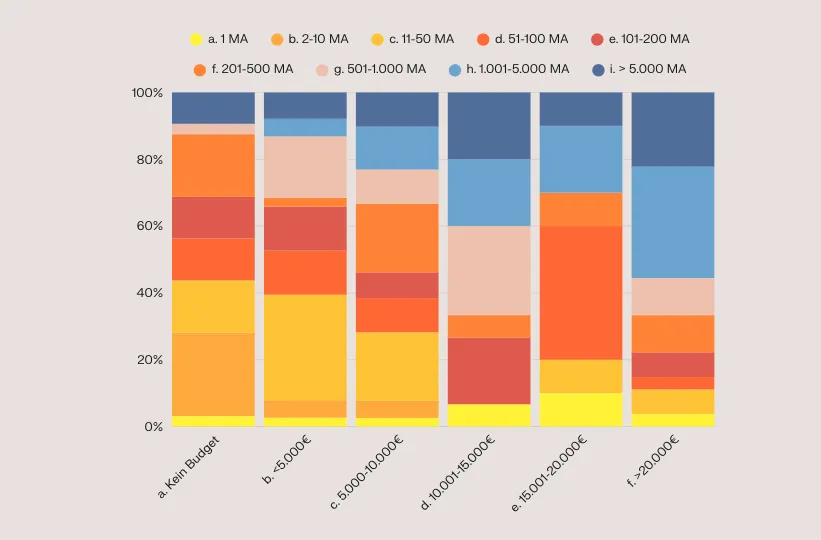
While companies with 2-10 employees in most cases have no PR budget at all (67%), this figure drops to just 18% for companies with 11-50 employees. In fact, almost 75% of companies of this size allocate up to 10,000 euros for PR. From this point on, budgets rise quickly. At least every second company with 50 or more employees has a PR budget of 10,000 euros or more.
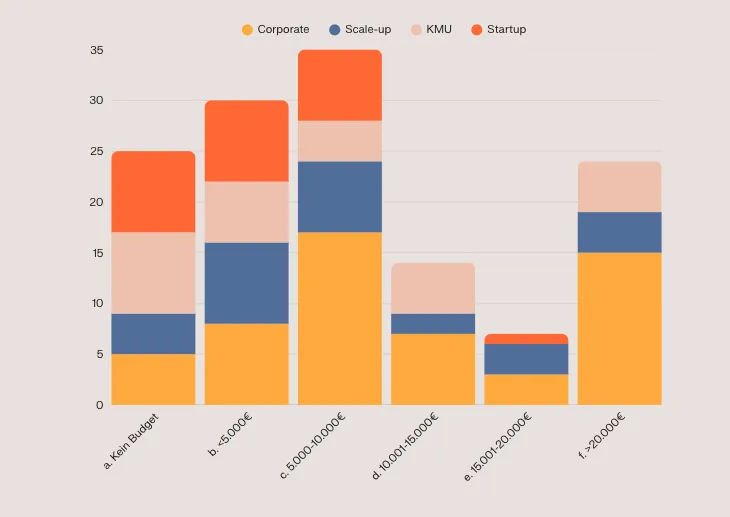
96% of the startups surveyed spend a maximum of 10,000 euros per month on PR, while 40% of corporates, SMEs, and scale-ups plan for a budget of more than 10,000 euros per month.
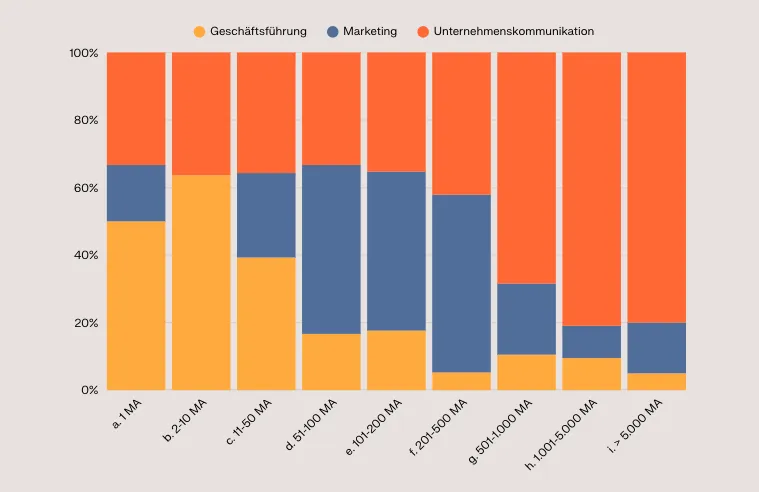
In small companies with 2-50 employees, managing directors still make the decisions in 50% of cases. In medium-sized companies with 51-500 employees, the marketing department increasingly takes over (50%). From a size of 501 employees upwards, it is primarily corporate communications itself that manages the budget (between 68% and 80%).
Despite the recession and economic uncertainty, there has been no shift in the perceived value of PR and communications. But what impact does the budget actually have on media presence in the end?
"The fact that German companies are not cutting their PR budgets despite these challenging times is a positive sign. Studies by McKinsey and others show that companies that invest in their brand during a crisis not only weather the storm better but also return to growth faster."
03.
67% of the companies surveyed can consider themselves lucky: they appear in the media at least every few weeks. But what sets them apart from the rest? What are they doing differently—and perhaps better?
It comes as no surprise that company size, budget, and PR methodology have a significant impact on the frequency of media coverage. What is surprising, however, is that the PR setup—whether internal, external, or hybrid—showed no additional influence compared to the three factors mentioned.
Note: This result is based on the examined correlation between PR setup (internal vs. external vs. hybrid) and the frequency of coverage. The analysis could not differentiate which areas of PR are outsourced or how much budget is invested in internal versus external personnel resources. Therefore, this result should be interpreted with caution.
A direct comparison shows that choosing the right methodology has the greatest effect on media coverage—three times as much as company size and even four times as much as the PR budget. The best part: it is much easier to adjust your methodology.
Our evaluation shows that almost all the PR methods surveyed have a statistically significant impact on journalistic coverage. We tested the effectiveness of the following methods: press inquiries, proactive outreach with individual stories, press releases, influencer relations, trade fairs & events, and collaborations & partnerships.
Regarding the last two methods, it should be noted that they are not aimed solely at media coverage, or at most, achieve it only as an indirect effect.
Therefore: Check the news value of your story before drafting a press release, and spare journalists irrelevant content by avoiding large distribution lists and focusing on targeted outreach instead. At getpress, we use our internal PR checklist for this purpose.
04.
94% of the companies surveyed use tools to measure the success of their PR work. For the majority of companies, a combination of different methods is particularly popular.
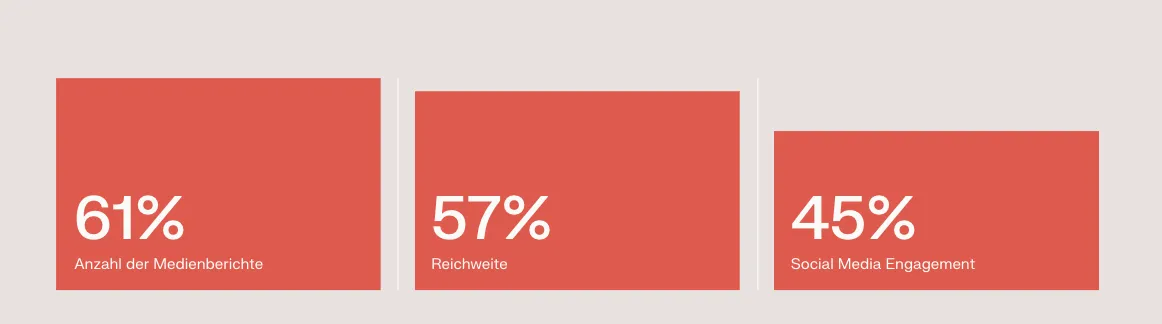
Reach in combination with the number of media reports and quality is used particularly often. Other combinations include social media engagement and website traffic.
Honestly, using reach to measure success is a double-edged sword. It looks great, but it says little about how successful your PR work really was. The actual reach of an editorial piece is almost impossible to track, as media outlets only publish their monthly user numbers. To estimate the value of a specific piece, you need approximation formulas – and everyone probably has their own.
More nuanced metrics like sentiment analysis or share of voice are primarily used by companies with 1,000 or more employees. While these metrics would also be relevant for smaller businesses, they often have limited budgets, making it difficult to invest in advanced data analysis tools.
Implementing such systems can be costly, both in terms of acquisition and ongoing operation. Furthermore, SMEs in particular are often under-digitized.
You can learn more about our recommended methods for measuring PR success in this article.
05.
Only 7% of companies are not yet using AI. The majority of the 190 companies that do use AI rely on ChatGPT—75% for general chat, and 38% even for custom GPTs. These are individually tailored AI language models trained specifically on company data or requirements.
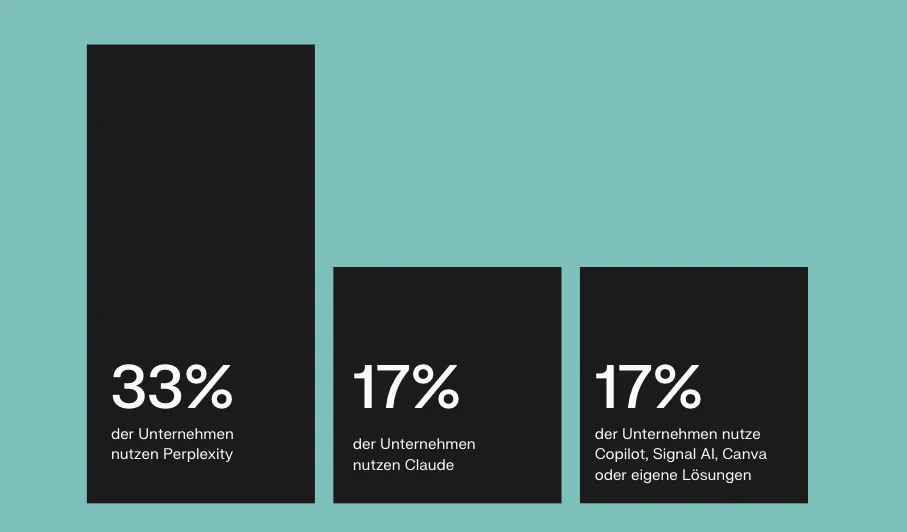
33% of companies use Perplexity, 17% use Claude, and another 17% use tools like Copilot, Signal AI, Canva, or proprietary solutions.
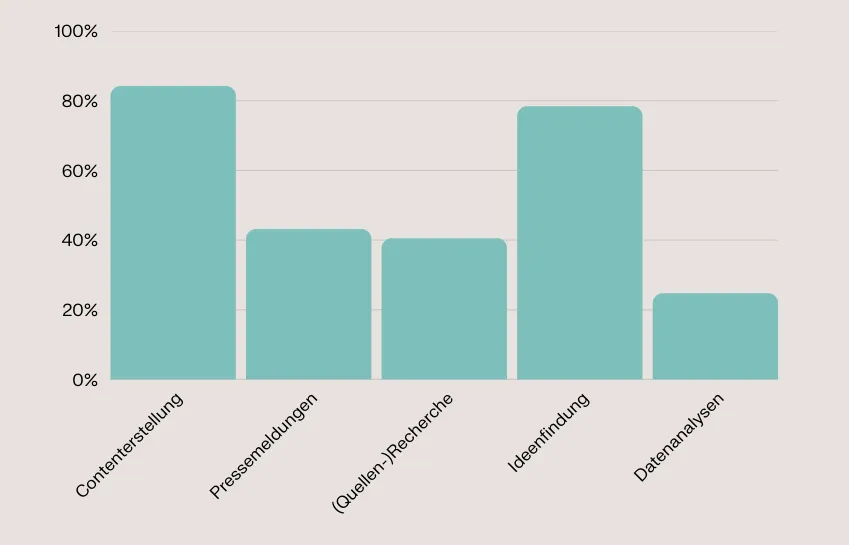
Content creation (80%), brainstorming (75%), and press releases (45%) are clear top priorities. Research and data analysis are also key areas, with 42% and 30% of companies using AI for these tasks, respectively.
What’s particularly exciting is that there is no correlation between AI usage and company size. Agile startups and large corporations are adopting the technology in similar ways—a clear sign that AI isn't just for startups and scale-ups, but that "big players" are also using it to take their PR strategies to the next level.
Conclusion: Most companies rate the efficiency gains from AI at 7/10 – with a median of 7 and a mean of 7.33/10. It is clear that AI not only boosts productivity but is also a true game changer for PR.
"The PR industry is integrating AI impressively fast. Now it’s about staying the course and keeping up with rapid developments. AI as a 'co-pilot' is just the beginning – AI workflows or even autonomous AI agents will make work even more effective. Those who don't stay engaged risk falling behind."
06.
Almost every second company relies on external PR support. But what are the things companies actually prefer to outsource?
Comparing all measures, these are the primary PR elements for which companies seek external support:
The less positive takeaway: average satisfaction is only 6.3/10. Notably, satisfaction is independent of company size, target audience (B2B vs. B2C), and PR budget. Furthermore, while no direct correlation with company structure can be established, it is striking that satisfaction levels among corporates and SMEs vary significantly more than those of scale-ups and startups.
We asked companies what they value most in their collaboration with agencies. A look at the responses helps to understand where agencies still have room for improvement.
Agencies need to do more than just "process orders." Companies expect creative ideas, innovative campaigns, and a proactive approach that constantly identifies new opportunities for brand positioning. “Proposing proactive ideas that actually work” (Corporate, B2B, Logistics), “Drive, trust, being on equal footing, independence, professionalism, likemindedness, ‘external team extension’” (Scale-up, B2C, Energy & Climate).
Clear communication and regular updates are essential. This is about honest assessments—even in the face of failure—and reliable planning of PR measures. “Trust and fair prices” (Agency, B2B, Energy & Climate), “Transparency. Congruence between words and actions.” (Corporate, B2C, Travel)
Measurable results and aligning PR activities with overarching corporate goals are indispensable. Success should be measured by achieved media placements and their impact. “Results” (Scale-up, B2C & B2B, SaaS), “Goal orientation, pragmatic approach, fast implementation.” (SME, B2B, Mobility)
Speaking of results: Almost every second company (40%) does not set fixed goals with PR agencies. Everyone else, much like in internal performance measurement, often relies on a combination of several metrics, with the number of articles in target media (69%), reach (67%), and the number of articles (general) (59%) being the most popular.
»The PR industry is in a crisis of confidence. Buzzwords and empty promises are no longer enough. Modern PR means radical transparency, data-driven strategies, and measurable results. Agencies must stop hiding behind vague concepts and instead set clear, success-oriented goals. That is the only way they will remain relevant in 2025.«
07.
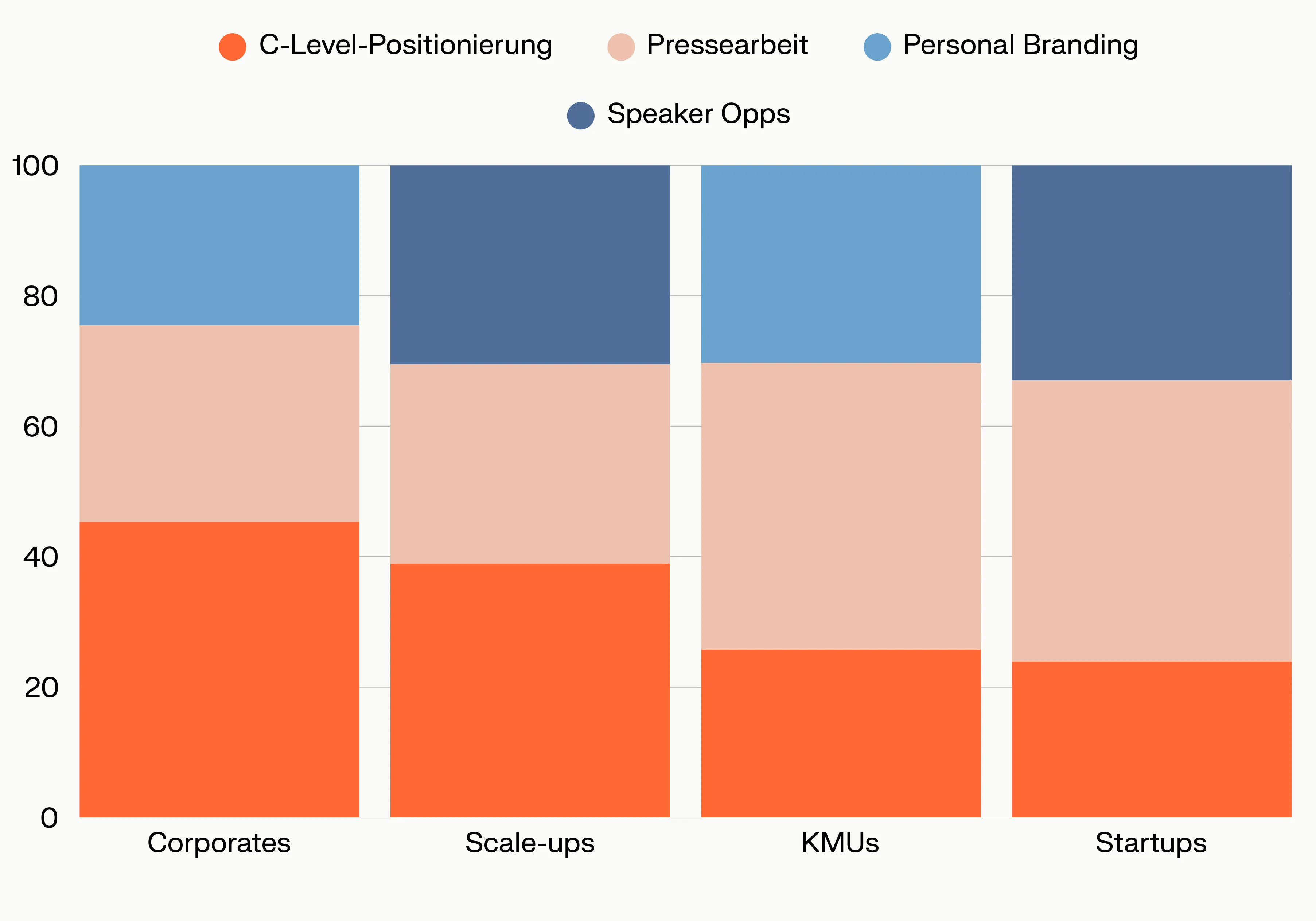
Almost one in five companies (17%) plans to invest more in personal branding in 2025. The reasoning? An individual, personalized approach through executives and experts is increasingly recognized as a valuable PR channel.
08.
The communications industry is at a turning point in 2025. Data-driven decisions and technological integration are no longer just optional; they are essential for successfully navigating a rapidly changing media landscape.
Despite challenges such as resource constraints, visibility issues, and, not least, staff shortages in newsrooms, it is clear that a solid understanding of one's own goals and challenges is crucial for success.
The integration of AI into PR work has already proven to be a game changer, increasing efficiency and offering new possibilities for content creation and data analysis. At the same time, the human element of PR remains indispensable: understanding target audiences, telling authentic stories, and building genuine relationships remain invaluable.
Not everything that defines modern communication has been implemented yet. While the industry is evolving slowly, those who identify and adopt trends early will not only weather the crisis but emerge from it stronger. Combined with clear KPIs, intensive media relations, and a personalized approach, you can set your PR on a path to success—and give your company the visibility it needs. Companies that actively address external factors like climate change, technological progress, and economic uncertainty will be successful in the long run.
Overall, it is clear that the combination of technological integration, data-driven strategy, and the human element is decisive for success in the 2025 communications industry.
Thank you for your participation!
©
0
getpress GmbH




%20(45).png)
).png)
%20(45).webp)
%20(1).webp)